Reminders:
4/10 - Field Trip to River Oaks Country Club for Men's Clay Court Tennis Championship
4/18 - Field Trip to Main Street Theater
4/27 - Progress Reports go Home
5/9 - Bike to School Day
5/10 - Gallery Night @ 5:00
5/14 - Math STAAR
5/15 - Reading STAAR
5/22 - Publishers' Picnic
5/24 - Chariot Races @ 8:30
5/25 - Winds of Time Parade
5/28 - Memorial Day (No School)
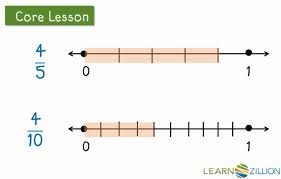
Math: As we better understand how to compare fractions with like denominators on a number line, we move on to comparing fractions with the same numerator but different denominators. The key is to visualize how big the pieces are. A very difficult concept for many students is that, as the denominator gets larger, the number of pieces the whole is divided into increases AND the size of the pieces gets smaller. The bigger the denominator, the smaller the pieces. So, 3/5 is smaller than 3/4 because the "fifths" pieces are smaller than the "fourths" pieces.

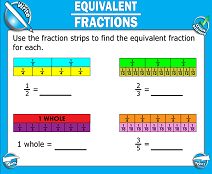 Students will construct a Fraction Taco and practice exchanging one fraction for its equivalent while playing this very fun game.
We will also learn the box method of multiplying 2 digit X 1 digit. It is similar to the expanded form we learned last week but is put in a neat little box. Finally we move to the usual algorithm that most adults use.
Our usual Problem of the Week and Fast Fact Friday quiz will take place on Friday, April 6.
Science: This week students will complete an activity researching the current temperatures in 4 cities in different parts of the U.S. and world and record those temperatures on thermometers with different scales. Tuesday students are introduced to an on-going weather unit and will examine tools used by meteorologists to view current weather conditions and the movement of weather patterns across our area, state and country.

Reading: Our readers will be working on how to approach a piece of text to determine which parts are important vs. interesting. (Oftentimes these are two different things.) The first step is to preview a piece of text to develop initial understanding. Secondly, the text is read and read again, this time considering what the writer would most want the reader to know. In addition, our children will continue their work evaluating the genre of test, and how it is uniquely different from other genres. For example, if you were reading a book for pleasure, it would not be typical to take notes, highlight key sections, or navigate how to best answer created questions. This is necessary when working through our state assessment.
Writing: Expository writing shouldn't sound robotic or leave the reader feeling bored!! This week HCE writers will work on developing effective endings. They have experimented with creating leads that draw a reader in, so now they will work on leaving the reader with "food for thought". Although the purpose of an ending is to restate the topic, it should be memorable and not repetitious. The models the teachers provide will give valuable insight to this craft.
Social Studies: Our global economy is complex, so it is never too soon to learn about how economies operate and the key concepts involved. This work our third graders will be using a video series called Econ and Me to understand about saving vs. spending, needs vs. wants, as well as how goods and services as well as producers and consumers are central to an economy. Who knows? By the end of study, we might just have the next child entrepreneur in our midst!
4/18 - Field Trip to Main Street Theater
4/27 - Progress Reports go Home
5/9 - Bike to School Day
5/10 - Gallery Night @ 5:00
5/14 - Math STAAR
5/15 - Reading STAAR
5/22 - Publishers' Picnic
5/24 - Chariot Races @ 8:30
5/25 - Winds of Time Parade
5/28 - Memorial Day (No School)
Math: As we better understand how to compare fractions with like denominators on a number line, we move on to comparing fractions with the same numerator but different denominators. The key is to visualize how big the pieces are. A very difficult concept for many students is that, as the denominator gets larger, the number of pieces the whole is divided into increases AND the size of the pieces gets smaller. The bigger the denominator, the smaller the pieces. So, 3/5 is smaller than 3/4 because the "fifths" pieces are smaller than the "fourths" pieces.
4/5 > 4/10
Later in the week we will begin a study of equivalent (equal) fractions or fractions that show the same amount but use different numerators and denominators. We will use various models and manipulatives to visualize the area covered by equivalent fractions.
We will also learn the box method of multiplying 2 digit X 1 digit. It is similar to the expanded form we learned last week but is put in a neat little box. Finally we move to the usual algorithm that most adults use.
Our usual Problem of the Week and Fast Fact Friday quiz will take place on Friday, April 6.
Science: This week students will complete an activity researching the current temperatures in 4 cities in different parts of the U.S. and world and record those temperatures on thermometers with different scales. Tuesday students are introduced to an on-going weather unit and will examine tools used by meteorologists to view current weather conditions and the movement of weather patterns across our area, state and country.
Reading: Our readers will be working on how to approach a piece of text to determine which parts are important vs. interesting. (Oftentimes these are two different things.) The first step is to preview a piece of text to develop initial understanding. Secondly, the text is read and read again, this time considering what the writer would most want the reader to know. In addition, our children will continue their work evaluating the genre of test, and how it is uniquely different from other genres. For example, if you were reading a book for pleasure, it would not be typical to take notes, highlight key sections, or navigate how to best answer created questions. This is necessary when working through our state assessment.
Writing: Expository writing shouldn't sound robotic or leave the reader feeling bored!! This week HCE writers will work on developing effective endings. They have experimented with creating leads that draw a reader in, so now they will work on leaving the reader with "food for thought". Although the purpose of an ending is to restate the topic, it should be memorable and not repetitious. The models the teachers provide will give valuable insight to this craft.
Social Studies: Our global economy is complex, so it is never too soon to learn about how economies operate and the key concepts involved. This work our third graders will be using a video series called Econ and Me to understand about saving vs. spending, needs vs. wants, as well as how goods and services as well as producers and consumers are central to an economy. Who knows? By the end of study, we might just have the next child entrepreneur in our midst!


