Showing posts with label poetry. Show all posts

Sunday, January 28, 2018

Week 21: January 29th-February 2nd

Week 21:  January 29th-February 2nd

Reminders: 
2/2: Spring Group Pictures are this Friday.  These pictures are taken as homerooms.   Time slots are as follows. 10:25 Rozzell/Morphey, 10:35  Badrak/Saint Val, and 10:45 Duncan/Ford.  
2/6 and 2/7:  HCE Book Fair located in library. 
2/8 and 2/9: Noon Dismissal

Reading:  Determining the main idea of a text can be tricky business!  We're going to continue searching for text clues (text evidence) to infer the main idea of an entire or portion of text.  Your readers will see this week that identifying the main idea from several sections of an article will lead to a strong nonfiction summary.  We will conclude the week by introducing cause and effect relationships.  Cause and effect is something we experience in our daily lives.  We will learn tools to identify this relationship within a nonfiction text. 
Image result for cause and effect anchor chart
Writing:  We will celebrate your poet's hard work this week!  Our publishing celebrations are always a wonderful way to unite as a community of writers and "high five" one another on a job well done.  Your children are excited to share their finished anthologies with their peers.  Later in the week we will practice note taking strategies as we read through a nonfiction text and organize our thoughts/reactions and important ideas.  
Social Studies:  We're rounding out our study of maps this week.  Students will apply what they have learned throughout the month to create their own maps.  We're challenging them to include a title, compass rose, legend, map scale, and grid system.  
Math: We will continue to learn many strategies to multiply such as skip counting, number line, area model, and an array model. We will build from easier digits such as 5 and continue to increase the digit to 6 through 9. As it is important to know multiplication facts, we are helping our mathematicians understand and internalize what it truly means to multiply, where they can see it in the real world, and how to apply it in their daily lives. 


Homework: In addition to our Monday-Wednesday regular homework pages, we will begin "Problem of the Week." This assignment will be sent home every Monday and will need to be returned on Friday. This assignment is meant to be a team effort as we would like your student to solve the problem alongside you.  On Friday, we will discuss the many ways your student solved the problem with the support from you all! 
Science: The students will learn and understand how soil is formed and the role of decomposition. Later in the week, the students will explore plate tectonics and its relation to earthquakes and volcanoes. Soil is different in different places because of different rocks in the area and different plants and animals that live there and die and decay. Important concepts to remember:
  • Constructive forces build up the Earth
  • Destructive forces tear down the Earth
  • Earthquake:  A sudden release of energy under the Earth’s surface that makes the ground shake or crack.
  • Earthquakes build up the land (constructive) by pushing upward forming mountains and tear down the Earth (destructive) by opening crevices and causing land to fall or slide.
  • Weathering: The process that breaks down rocks into tiny pieces over time.
  • Erosion:  The carrying away of weathered rock 
 
  • Different types of Soil: Sand, Clay, Humus, Loam


Sunday, January 21, 2018

Week 20: January 22nd-26th

Week 20:  January 22nd-26th


Reading:  Last week was cut extra short because of our school holiday and ice days.  We were not able to get to everything we needed to because of this, so we're continuing with last week's plan for a portion of this week.  Your reader will continue to navigate detailed maps, diagrams, tables, photographs, and captions within nonfiction articles.  We will discuss how these features support their understanding of the text topic.  As we move forward in the week, we will introduce main idea.  Main idea is the central idea of a text.  Comprehending the main idea is important in order to understand the purpose for writing.  We will be learning tricks and tools to help aid your reader in identifying what an article is mostly, or mainly, about.  

Writing:  We will officially wrap up our poetry unit this week!  Your writers have been hard at work drafting a variety of poems since returning to school in 2018.  We will choose some of our favorites to revise and edit and then publish an anthology using Google Docs.  Our week will end with a celebration of our published work!  

Social Studies:  We will continue using maps as every day tools.  Utilizing map scales will be our focus for this week.  Students will practice using a map scale to calculate distances between cities.    

Math: We will continue to solve addition and subtraction problems regarding time intervals in minutes using pictorial models and/or tools. It is important to remember the danger zone. This is when the minute hand reaches the 50 and 55 minute mark and the hour hand looks like it has reached the next hour. The students will continue to manipulate clocks to deepen their understanding of time. Later in the week, students will be introduced to multiplication. We will be learning specific multiplication strategies such as the array and number line strategies. An array is a group of objects that shows numbers in equal rows or columns.
                     

Homework: Students will be given homework Monday - Wednesday. Also, please make sure your mathematician is on DreamBox and SumDog at home.
               
Science: We will continue to observe forces such as magnetism, friction, and gravity acting on objects. Also, we will be learning about specific tools that make work easier such as pulleys. We will then have our Force and Motion quiz on Wednesday, January 24th. Later in the week, we will begin investigating how rocks can break down to form soil. Please make sure your scientist is studying the study guide and vocabulary cards every day.


Sunday, January 14, 2018

Week 19: January 15th-19th

Week 19:  January 15th- 19th 
Reminders: 
1/15:  School Holiday We hope you all had a fabulous three day weekend!
Force and Motion Science Quiz is on Wednesday, January 24th!

Reading:  Your readers will continue to dive deeper into nonfiction text features.  We will learn how to navigate detailed maps, diagrams, tables, photographs, and captions and discuss how these features support our understanding of the text topic.  As nonfiction readers, we access information from these various features and tools within the text in a different way than fiction stories and poems we read.  It takes practice!  We will continue to model and think through informational articles about Earth's resources, a tsunami warning system, and sea turtles.
Image result for article with text features
Writing:  We will begin the final stages of our poetry writing unit this week.  Your writers have been hard at work drafting a variety of poems since returning to school in 2018.  We will end our week choosing some of our favorites to revise and edit.  We will prepare some of our best as well as favorite poems to publish using Google Docs.  We will celebrate our hard work within our writing community early next week. 

Social Studies:  We worked our way through academic language associated with maps and map skills last week and will apply what we learned this week.  We will practice interpreting maps of places and regions in order to identify and locate information related to the area.  For example, identifying mountain ranges and rivers in the region or explaining directions from one city to another using a compass rose or other piece of information from the map.  

Math: We will continue to solve addition and subtraction problems regarding time intervals in minutes using pictorial models and/or tools. It is important to remember the danger zone. This is when the minute hand reaches to the 50 and 55 minute mark and the hour hand looks like it has reached the next hour. The students will continue to manipulate clocks to deepen their understanding of time.  
The Danger Zone

Later in the week, students will be introduced to multiplication. Please make sure your mathematicians are on DreamBox and SumDog

Example problem: Melissa has a ballet class at 3:10. Her jazz class starts 45 minutes later. Does Melissa need to add or subtract to find the start time for her jazz class? How do you know?

Science: We will observe forces such as magnetism, friction, and gravity acting on objects. The students will be engaged in activities such as demonstrating how magnets attract and repel as well as using pulleys. We will then have our Force and Motion quiz is on Wednesday, January 24th. Students should be studying the yellow vocabulary cards and information sheet daily for homework until the test. Important concepts to remember:
  • Compass needles point north because of magnetism.
  • Like poles repel and opposite poles attract.
  • Attract is a pull.
  • Repel is a push.

Tuesday, January 2, 2018

Week 17: January 3rd-5th


Week 17:  January 3rd-5th 


Happy 2018! 
We hope you all had a wonderful holiday break.  
We look forward to welcoming back your children tomorrow!  

Reminders: 

1/9  STAARY STAARY NIGHT  Third grade will host a STAAR information session Tuesday evening, January 9, to familiarize parents with our May state testing and answer any questions. We will meet in the library form 6:00pm to 7:00pm.

1/10  2nd NINE WEEKS RECOGNITION CEREMONY will be held in the cafeteria from 9:00-9:40am. 

1/10  3rd GRADE AUTHOR VISIT   Mac Barnett, author of The Terrible Two series, will visit our school on Wednesday, 1/10 and spend time with our 3rd graders.  You can purchase a copy of any of his books using the following link through Blue Willow Bookshop.  


Reading:  We have a quick, but action-packed week in reading as we begin our nonfiction genre study. For the next few weeks your readers will immerse themselves in a variety of nonfiction texts to learn about the purpose and structure of the genre. We will launch our unit by reading high-interest informational articles about the Guinness Book of World Records and penguin rescues this week. Reading MAP testing begins this week and will continue into next.

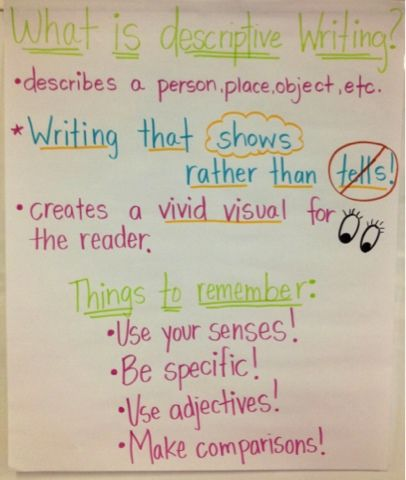
Writing:  Students will review how to story tell by sharing some of their favorite memories from our two week break.  As the week progresses we will shift our focus to our poetry unit of study.  Your writer will begin looking at poetry through the eyes of the writer.  Students will read and study anchor poems that showcase rich vocabulary as well as portray vivid mental images that spark our senses.

Word Work: 
We will continue to facilitate independence and confidence as students perfect their spelling skills within their independent writing. 


Social Studies:  Students will locate a variety of maps from nonfiction articles we read.  We will study these maps to note their features and specifically define key, compass rose, and scale. 

Math: This week we are focusing on taking the winter MAP test. We will also explore the MAP website as we will use it for additional practice. Then, it is on to measuring and calculating the perimeter of polygons. Perimeter is the distance around the outer edge and the sum of all the sides. Along with this basic knowledge, students will be given the perimeter of an object and the lengths of all but one side. Students must subtract to find the value of the missing side.


Students will only have homework on Wednesday but should study their math facts daily.


Science: We will observe how position and motion can be changed by pushing and pulling objects to show work being done. Some examples include swings, balls, pulleys, and wagons. We will also observe forces such as gravity and friction acting on objects. Gravity is the force that pulls all objects together. Friction is the force between two moving objects that tries to keep the objects from moving freely. We will discuss examples of each.


Sunday, January 15, 2017

Week 20: January 17-20

Upcoming dates to put on your calendar:

1/16 - School Holiday for Students and Staff 

1/17 - School Store Open 7:30am - 7:50am for 3rd, 4th and 5th graders, near the library

1/19 - 9:30am PTA General Meeting

This week in third grade...

Reading: Readers will consume and analyze a variety of fiction and non-fiction texts in order to notice and name differences between the genres.  We will look specifically at narrative non-fiction texts and focus on why authors choose to write about topics in this manner. 

Narrative non-fiction: a genre of writing that uses literary styles and techniques to create factually accurate narratives. (This will be a genre presented on the STAAR test in May.) 

Essential questions we will consider: 
  • Instead of writing biographies, why would an author choose to write about a person or event in a narrative format? 
  • What is the purpose of this genre? And how can we identify it? 

Writing: Writers will wrap up our poetry unit this week. We will choose our favorite poems, revise them, edit them, and publish our best work. On Friday, we will have our end-of-unit writer's celebration and share our pieces within our community of writers. We have loved watching our writers experiment with different types and styles of poetry the past few weeks! 


Spelling: Due to our WITS schedules and differentiated grouping across ELA teachers/classrooms, we will be moving our spelling day to Thursday this semester (with the exception of the white group that will stay on Wednesday). New spelling groups started Thursday, January 12, and the test will be Thursday, January 19th. 

Social Studies: We will continue our economics unit and will be focusing on goods and services this week. We will be able to differentiate between the goods and services we use as consumers in our own lives. 

Goods and services anchor chart Consumer anchor chart Goods vs services  2nd grade social studies:


Math: This week is dedicated to a review of multiplication and division. Students will practice recognizing when to use each operation and how to use the many strategies we have learned in the past few weeks. Multiplication problems give you two numbers (factors), the number of groups and the number in each group. The question asks for a total number (product). Strategies explained in earlier blog posts include equal groups, number lines, arrays, skip counting, and repeated addition. Division problems give you the total and how many groups you will make with that large number. The question asks for how many are in each group.(quotient) The octopus strategy is best for this. It could also give you the total and the number in each group and ask for the number of groups you can make.(quotient) The cookie strategy works best for this. Other division strategies include skip counting, repeated subtraction and knowing the related multiplication fact that will give you an immediate answer. These strategies are also explained in previous blog posts. After several days of practice, students will be tested on their multiplication and division skills this Friday.
FFF (Fast Fact Friday) quiz will still be on Friday this week. If your child is not well into knowing their multiplication facts, at least on sixes or sevens, it is time to step up the effort. Please help your child practice flash cards, previous quizzes, and apps to solidify their knowledge of basic facts. Multiplication is a priority, but don't forget to review addition and subtraction every once in a while. There is no POW (Problem of the Week) this short week. This Thursday, we will give the next PSA to see how our students have grasped concepts taught the first half of the year. 

Science: Having just finished a unit on Force and Motion, we move on to Natural Resources. One of Earth's greatest resources is soil. Beginning with the processes of weathering and erosion, soil is a combination of pieces of weathered rock, air, water, and decomposed plants and animals called humus. Worms and insects allow air and water to enter soil and help make it great for growing plants. Decomposition of all living materials is part of the life cycle and food chain. Knowing what will and will not decay will help students understand the importance of recycling and not littering. 

natural resource - anything made by nature and used by man
weathering - the process the breaks down rocks into tiny pieces over time
erosion - the carrying away of weathered rock
agents - causes
decompose - rot, decay
organic - living or once alive
humus - decomposed organic material (plants and animals)


Sunday, January 8, 2017

Week 19: January 9-13

Upcoming dates to put on your calendar:

1/9 - Parent Education Meeting  9:30am - 10:15am       Math Facts With Your Child: Learn how to help your child master the basic facts (addition, subtraction, multiplication and division) with some easy games you can play at home.

1/10 - STAARY STAARY NIGHT - Informational Parent Meeting about the third grade STAAR test. We will meet in the library from 6:00 - 7:00 p.m.


1/16 - School Holiday for Students and Staff 


1/17 - School Store Open 7:30am - 7:50am for 3rd, 4th and 5th graders, near the library

1/19 - 9:30am PTA General Meeting

This week in third grade....

Reading: Readers will wrap up our unit in poetry on Monday and Tuesday. We will look at a familiar poem, answer questions about the piece, and discuss how the text evidence helped us draw conclusions. 

Next, we will start thinking deeply about summarizing texts. We will read familiar passages and decide how to best summarize the events in the story. We will use a fun method called CPR, which stands for Characters, Problem, and Solution, to find the best answer choice. The best summaries include all three components. 

Writing: Writers will begin writing poetry this week! After spending time consuming poetry in reading, our learners are anxious to start looking at poetry through the eyes of a writer. We will write about ordinary things and ideas that create extraordinary feelings within us. We'll be looking at 4 elements to help guide our poetry writing: central ideas (theme), purpose (who is your audience and why are you writing this piece?), mood, and form (which poetic form best conveys your theme and purpose?). 

Spelling: Mid-year spelling inventories are complete. We have formed spelling groups based on the most current spelling data from our learners. New spelling groups will start this Wednesday, January 11th, and the test will be the following Wednesday, January 18th. 

Social Studies: We will begin our unit on markets, business, and budgets. This week, we will discuss in detail what a free market is and why it’s important to the US economy.

Math: This week we continue the study of division, striving for students to develop an "ear" for how a division situation sounds and then choosing an appropriate strategy. As explained in last week's blog post, our two main strategies are the "octopus" and "cookie" methods. We are also viewing division as "repeated subtraction", just the opposite of multiplication. Similar to the "cookie" method, this subtraction tells us how many groups you will end up with in the end. For example... If Chef Jones bakes 12 cookies and packages them into bags of 3, how many bags will he be able to fill? The equation is 12÷3=___. How many threes are in 12?
Yet another strategy is to "skip count" to find the answer. For 12÷3=___, skip count by 3 up to 12 and see how many numbers that is. 3,6,9,12 will give you 4. The final strategy, and the one we hope all third graders will eventually be able to use, is to know their multiplication facts well enough to come up with the "related multiplication" in that same fact family that will give them an immediate answer. Again, for 12÷3=___, if the student knows that 3x4=12 or 4x3=12, they will know that 12÷3=4. As the week progresses, our students will try their hand at writing division word problems that reflect real life situations. They will have an opportunity to solve each others' problems posted around the room. By Friday, we will revisit multiplication along with division and give students practice knowing when to use which operation. A new Problem of the Week goes home on Monday. Please work with your child to discuss and solve it. It is due on Friday. We will also have our regular Fast Fact Friday quiz on whichever facts your child has reached. As usual, there is written math homework Monday through Wednesday nights.

Science: In Science, we wrap up gravity then spend a few days playing with magnets and feeling how they repel and attract. Then we'll explore the benefits of using a pulley to lift heavy loads. On Friday, we will review force and motion and take a quick 15 question quiz.
Enjoy this quick video on pulleys.


Wednesday, January 4, 2017

Week 18: January 4-6, 2017

Happy New Year and welcome back! We hope you had a wonderful holiday break. We are looking forward to another incredible semester in third grade! 

Upcoming dates to put on your calendar:

1/3- Student holiday

1/4-Students return to school

1/6 - Third Grade Recognition Ceremony for the Second Nine Weeks, 9:00-9:30a.m. in the HCE Cafe

1/10 - STAARY STAARY NIGHT - Informational Parent Meeting about the third grade STAAR test. We will meet in the library from 6:00 - 7:00 p.m.

1/16- School Holiday for Students and Staff 

Reading: Readers will continue to read poetry! Before the break, we focused on information in the poem that  pulls at the reader's sense of hearing, smelling, seeing, feeling, and tasting. This week, we will spend more time studying how these sensory details also help us infer more about the character (feelings and emotions), situations, and moods we read about in poems. For example, what words in a poem suggest that a speaker is happy? or frustrated? We will use text evidence to support our thinking. 

Writing: Writers will review what good writers do to help them plan and organize a small moment to share in writing or in conversation. 

Spelling: New spelling groups will start Wednesday, January 11th, and the test will be the following Wednesday, January 18th. 

Social Studies: Our focus on good citizens turns to Dr. Hector P. Garcia this week. We will learn about how he worked to make life better for Latino and Hispanic Americans. 

Math: We continue our study of division this week. As an operation, division begins with a total (whole) and divides it into equal groups (parts). The octopus strategy is used when we know the total and the number of groups it is divided into. We are solving for the number in each group. This is how a problem like this sounds. A one pound bag of Snickers contains 24 candy bars. If 4 children share them equally, how many Snickers will each child get? 
The octopus strategy looks like this:


Wednesday we will review what we have already learned about octopus division and practice the strategy in class. On Thursday and Friday, students will be introduced to the other division strategy, the cookie method. This one is used when we know the total (whole) and how many will be in each group. We are solving for the number of groups that will be formed. A problem like this is: A one pound bag of Snickers contains 24 candy bars. If each child gets 4 Snickers, how many children will get candy bars? Using dots, the 24 candy bars are circled in groups of 4. We end up with 6 groups representing the 6 children who will get Snickers. The cookie method looks like this:


Math homework for Wednesday and Thursday will be to study for our weekly Fast Fact Friday quiz. There is no written homework.

Science:  On Wednesday we will be reviewing friction as the force between an object and the surface it moves over. Surfaces with much friction will slow an object quickly, whereas surfaces with little friction will not. Students will participate in a "Toy Car Race" to explore surfaces and friction in our room. On Thursday and Friday we will explore gravity and its effect on Earth and falling objects. Gravity is the force that pulls objects toward each other. Larger objects have stronger gravity than smaller objects. The Sun's gravity holds the planets in their orbits and the moon's gravity causes Earth's tides to rise and fall. The rate an object falls here on Earth is controlled by its shape and the amount of air resistance it experiences, not its weight or mass. Astronauts on the Moon performed an experiment that helps to show us that. 


Saturday, December 10, 2016

Week 17: December 12 - 16

December 12-16: Merry Christmas and Happy Holidays!
Reminders--
Friday, December 16th is a Noon Dismissal day. Please plan accordingly and send a handwritten note with any change of transportation.

Reading, Writing and Social Studies: Holidays around the World will be our focus this week through read aloud, shared reading, and writing.  We will share fiction, nonfiction and poetry from various traditions to teach students about the many ways people around the world celebrate during the winter.  By the week's end students will have heard how some people in and from Israel, Mexico, America, Greenland, Sweden, Australia, Italy, and India celebrate various winter holidays.  At home, please share with your child the origins of your family's traditions and celebrations.  .
Mrs. Cion, our WITS partner, will be with students on Wednesday morning and Thursday afternoon for creative writing workshop.  Last week she shared some poetry and discussed personification with our third grade writers.  It was fun to collaborate with them and use our imaginations as we pretended to be various objects and write poems from that object's perspective.

Spelling:  This week we will take an application grade.  We will look to see how your child applies his or her spelling patterns in daily work.
Students will also take the Elementary Spelling Inventory this week.  Teachers will use the data from this inventory to see how your child is progressing in his or her knowledge and application of spelling concepts.  We will readjust spelling groups based on this data for the spring semester.

Math: On Monday, the third grade math teachers will flexibly group our students and review skills for comparing and ordering numbers from our last PSA. On Tuesday, the students will rotate through each third grade teacher to learn about various Holidays Around the World. On Wednesday and Thursday, we will introduce your child to division. We will spend these two days learning about the octopus method for division. This method is used when we know the number of groups. We are looking for the number in each group. On Friday, we will complete our last rotation for Christmas Around the World.

We will have multiplication homework on Monday, Tuesday, and Wednesday. We will not have fast facts or problem of the week. 

Science: On Monday in science we will discuss force and the how work is being done on when an object is moved. We will spend time on these vocabulary words:

Motion-is a change in position  
Position-where an object is located
Work-happens when a force moves an object over a distance
Force-is a push or pull that causes an object to move, stop, or change direction

On Wednesday and Thursday, we will discuss friction. This is a term that we have discussed when we studied thermal energy. We will be reminded that friction is the force between an object and the surface it moves over. Friction creates heat and slows an object. We will look at different surfaces to understand the amount of friction that ice, tile, wood, carpet, concrete, sand, pebbles, dirt, grass, metal, playground rubber surface give off.


Tuesday, November 22, 2016

Week 15: November 28 - December 2


Reading: It's time to immerse ourselves in a new genre.  For the rest of November and most of December, we will be reading poetry.  We hope your child has come home excited about some of the poems we have shared together during our daily dose of Focus Poetry.  Our study during the reading workshop over the next few weeks will have us reading more closely and analyzing various aspects of poetry.  Students will learn and apply the poetry vocabulary of stanzas, lines, repetition, rhyme, speaker.

Writing: We will continue to consume author's craft through various mentor texts.  We will look closely at how authors use dialogue, repetition, and descriptive detail to help readers understand and enjoy the story.  At home, you can be sure to notice and share out with your child about dialogue that you read in stories together that helps either move the story along or tell you more about the characters.  Point out details that help you visualize what the characters are seeing and experiencing in the story.


Spelling:  New words will come home on 11/30.  A test will be give 12/7.  An application grade of those words in the context of reading and writing will be given 12/8-12/14.

Social Studies:  As we continue to learn about citizens who played an important role in our communities, we will learn about Jonas Salk.  Salk's research and work with vaccines has made a huge impact on the health of our community.  

Math: Each day in math this week, we will use our multiplication strategies to learn about multiplying by 6's, 7's, 8's, and 9's. Each day, we will listen to a song that helps skip counting by each of the multiples. We will not have a problem of the week this week. We will have a worksheet on Monday, Tuesday, and Wednesday. Please note that the Fast Facts Quiz will be taken on Thursday due to our Field Trip on Friday. 


Science: In science this week, we will wrap up our unit on energy. On Monday, we will create energy vocabulary cards for the energy test. The energy test is scheduled for Thursday, December 8th. On Tuesday,Wednesday, and Thursday, we will learn about sound energy. Sound energy is the energy of matter vibrating. A few of the important terms we will learn about are pitch and volume. Pitch is how high or low the sound is and volume is how loud or soft. 

Monday, April 25, 2016

LA/SS 4/26-5/6

REMINDERS- WITS Anthology Celebration is Wednesday, May4.  Mrs. Duncan’s homeroom class will celebrate and share from 10-11am in Mrs. Ford’s Classroom.  Mrs. Ford’s homeroom class will celebrate and share from 1-2p.m. in Mrs. Ford’s Classroom.  Parents and family members are welcome to join us for an exciting hour of readings, reflections and fun.  If you would like to contribute to our “THANK YOU” gift to our WITS instructor, Carolyn Bolton, please send $1.00 with your child to school by Friday, April 29.

LANGUAGE ARTS
Reading- This week we will wrap up our review of poetry.  Next week, students will work through a synthesizing menu to apply the reading skills and strategies we have learned this year.  Readers synthesize when they take information they know, strategies that support their reading and actively monitor and change their thinking while reading.

Writing- Students have done a terrific job of finishing up our criteria charts for a story from our life.  This week I will model the steps a writer goes through when trying to create an INCREDIBLE story from my life.  As I model, students will have a chance to reflect and respond to my choices in hopes to help them make great choices when they launch their own story.  Next week, students will begin the writing process and proceed at the pace that works best for them.  I can’t wait to hear and read some excellent stories!

Word Work- New words will come home 4/27.  A spelling test will be given on 5/4.  An application grade of those words will be taken 5/4-5/11.

SOCIAL STUDIES
If you haven’t caught an episode of ABC’s Shark Tank, I hope you will.  Below you will find a short clip of some of the most famous Shark Tank Jr. competitors.  Students will work in group over the next two weeks to complete and compete in a Shark Tank Jr. Challenge.  Today they met in their groups to start thinking about problems kids face and how they might offer and create a creative solution that could turn into a business opportunity!

MATH
In math this week, we will continue to review all of our math concepts from the entire school year. We will spend a day reviewing addition, subtraction, place value, and estimation. On Wednesday, we will review the different types of graphs we have learned this year. On Thursday and Friday, we will do a review circuit. We will have a POTW due on Friday and a Fast Facts quiz on Friday. The homework this week is all review. Your child will have 3-4 problems each night. Please make sure your child is doing their homework so they are getting extra review before STAAR next Monday.

SCIENCE
During our science time this week, we will review mass, weight, and capacity. These concepts are used in science and math. We will also practice using a ruler as we prepare for the Math STAAR.

Sunday, April 17, 2016

4/18 - 4/22

We hope that you enjoy the LONG weekend! 
REMINDERS:Scholastic book orders may be made online or you may send back the paper order with a check.  Please have April book orders turned in by Friday, April 22. PLEASE NOTE A CHANGE IN ASSESSMENT DATES.


LANGUAGE ARTS
READING- April is poetry month.  We will review poetry vocabulary and types of poems this week.  I'll be pulling small groups based on the two selection practice your child did in class last week.  Look for those to come home in the Tuesday Newsday folder.  This can serve for a great spring board for conversation at home about books and news. We will not send home a reading selection for homework this week due to the short school week.

WRITING- We will finish our criteria chart this week for what makes an INCREDIBLE story from my life.  The last few weeks of school we will spend walking ourselves through the writing process and producing and sharing stories from our lives.  Helping your child reflect on experiences or even say, "Hey, you should write that as one of your stories in school." could serve as great help when writer's are trying to get started during the process.


SPELLING- Words went home last week.  Spelling Test, Thursday 4/21.  Application grade 4/22-4/27.


SOCIAL STUDIES- Economic review sheets went home last Thursday. Our test will be Friday, April 22.  Remember to have your child use his or her log in on studiesweekly.com to review and preview concepts.  Our economics unit covers weeks 19-23. 


Math: In math this week, we will be discussing coins, bills, personal financial literacy, and patterns that can be found on a number line. As we review time and we begin reviewing money, I encourage you to talk with your children at home about these topics. It is important for your children to practice saying the time and reading a clock. Even with our short week, we will have three nights of homework. The homework this week will be a review on graphing, time, and money. Please encourage your child to do their homework and not use a homework pass. As we get into STAAR mode, we are sending work to help review and it is important for your child to continue to practice. We will have a problem of the week this week and a fast facts quiz on Friday. Please study the multiplication facts nightly. Your child needs to complete all of their multiplication facts before they leave third grade. Please check their progress on their multiplication checklist located in their green binder.


Science: In science this week, we will begin discussing the planets in our solar system. We will learn the order off the planets. We will use the mnemonic device - My Very Excellent Mother Just Served Us Nachos- to help us remember the planets in order. Your child will also have an opportunity to create their own mnemonic device.


***UPDATE - The Solar System test will be on Tuesday, April 26th***


Sunday, November 16, 2014

Nov. 17-Nov. 25 in Language Arts and Social Studies

LANGUAGE ARTS

READING
Reading
Last week we worked on talking about what strategies good readers use when comprehension breaks down.  Students agreed that when I ask what strategies they try when stuck their first response is usually, sound it out.  While that is one strategy that may help readers who are stuck, it isn't the most effective strategy.  Some other strategies we decided good readers use are:
asking ourselves- does it make sense?
if not, looking at the pictures
reading on
going back and rereading
trying out a synonym and seeing if it makes sense
looking for parts of a word we know
our list will continue to grow as students start noticing what is helpful when they come to a problem while reading.

We also started and will work until Thanksgiving on context clues.  Students know that context means that there are clues in the text that can help a reader discover a words meaning.  Students will participate in class discussions on Mufaro's Beautiful Daughters as we discover the story and uncover all the new vocabulary it has to offer.  They will also work in small groups to share strategies for comprehension.  


SPELLING

We will not have spelling work again until December.  Instead, students will bring home review homework on capitalization and punctuation.

WRITING and SOCIAL STUDIES
Students have been working hard in writing.  We will be working on a number of pieces over the next 7 days.  Students will learn some organization strategies to guide their publication of a personal narrative.

We will then combine our work in Social Studies and Writing.  Students will learn about personification by consuming the mentor text I am the Ocean.  They will apply what they know from our work with landforms and create a landform poem with personification.  These are always some of our most amazing writing pieces.  Your child will share his or hers with you at Publisher's Picnic in May.

Finally, we will also be working on postcards to tell friends and families about vacations we have taken to different regions.  Students will be expected to apply learning and share with the recipient the climate, weather, activities and landforms they encounter while on their imaginary vacation.